With the right alarm sensors and detectors, you can complete your wireless alarm system. Choose from motion detectors, magnetic contacts (door/window), and additional detectors, so your home or business is optimally protected both indoors and outdoors.
Alarm sensors and detectors are the 'eyes and ears' of your security system. They detect movement, the opening of windows and doors, or other events, and immediately send a notification to the central hub. Popular sensors include motion detector alarms, motion sensor alarmsand magnetic contact alarms.
Types of sensors: which ones do you need?
Motion detectors (PIR / dual-tech): PIR(passive infrared) detects temperature differences; dual-techcombines PIR with microwave (less false alarms in challenging environments). Choose indoor detectorsfor hallways/living areas and outdoor detectorsfor gardens/fences.
Magnetic contacts (door/window): These detect the opening/closing of doors and windows. Ideal as a 'first line' of defense against burglary: you get an immediate alarm as soon as an entry point is opened.
Special detectors: Consider vibration/shock detection on window frames, glass break detection, or combined sensors. Use them strategically at risk points or for valuable inventory.
Indoor vs. outdoor: placement and performance
Indoors, choose sensors with a pet-immuneoption (ignores pets) and a viewing angle/range suitable for the space. Outdoors, weather-resistant(IP-rated) and tamper-proofdetectors are crucial. Place outdoor detectors so they cover pathways, not directly facing public roads or moving bushes, to minimize false alarms.
How to create a reliable sensor plan
Perimeter first: equip all entry points (front/back door, sliding door) with magnetic contacts.
Through routes: cover hallways and the route to valuable rooms with motion detectors.
Outdoor surveillance (optional): use outdoor detectors for early detection in the garden/driveway.
Sirens & control: combine with an indoor siren/outdoor sirenand convenient control via an app or control panel.
Smart expansion and integration
Just starting out? Begin with a starter kitand expand strategically with additional sensors and detectors. Modern systems can be integrated via an app, allowing you to set zones, sensitivity, and delays for each sensor. This minimizes false alarms and maximizes reliability.
What is the difference between a motion detector and a motion sensor?
In practice, the terms are used interchangeably. A motion detector (PIR) detects temperature differences; a dual-tech sensor adds microwave for extra reliability.
Where should I place a motion detector for the best results?
Aim at walkways (hallway, landing, living room) at a height of approx. 2.2–2.4 m. Avoid direct sunlight, heat sources and moving curtains/plants.
Should I also install sensors outside?
Not mandatory, but effective for early detection. Choose outdoor detectors with weather-resistant housing and the correct viewing angle to limit false alarms.
How many magnetic contacts do I need?
At a minimum on all primary entrances (front door, back door, sliding doors). Extras on windows/doors on the ground floor and accessible upper floors increase security.
How do I prevent false alarms?
Choose pet-immune sensors for homes with pets, set sensitivity and zones correctly, place sensors away from drafts, and combine with dual-tech where necessary.



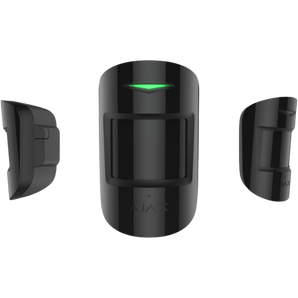 Ajax CombiProtect – Motion and Glass Break Detector
 Ajax MotionCam (PhOD) – Motion Detector with Camera
 Ajax MotionCam – Motion Detector with Camera
 Ajax MotionProtect Plus – Radar and Infrared

 Ajax MotionProtect - Wireless Motion Detector


 Dahua DHI-ARD323-W2(868S) - Reliable Wireless Magnetic Contact


 Dahua ARD1731-W2(868) Wireless PIR Camera Motion Detector


